 Class:
 Mammalia
Order: Carnivora
Suborder: Feliformia
Family: Felidae
Genus: Panthera
Species: Panthera pardus
IUCN Red List Status: Vulnerable.
Population: No range-wide estimate avaliable. Likely under 15,000 individuals, with a stronghold in India.
Trend: Decreasing, with a decrease of >30% since 2008.
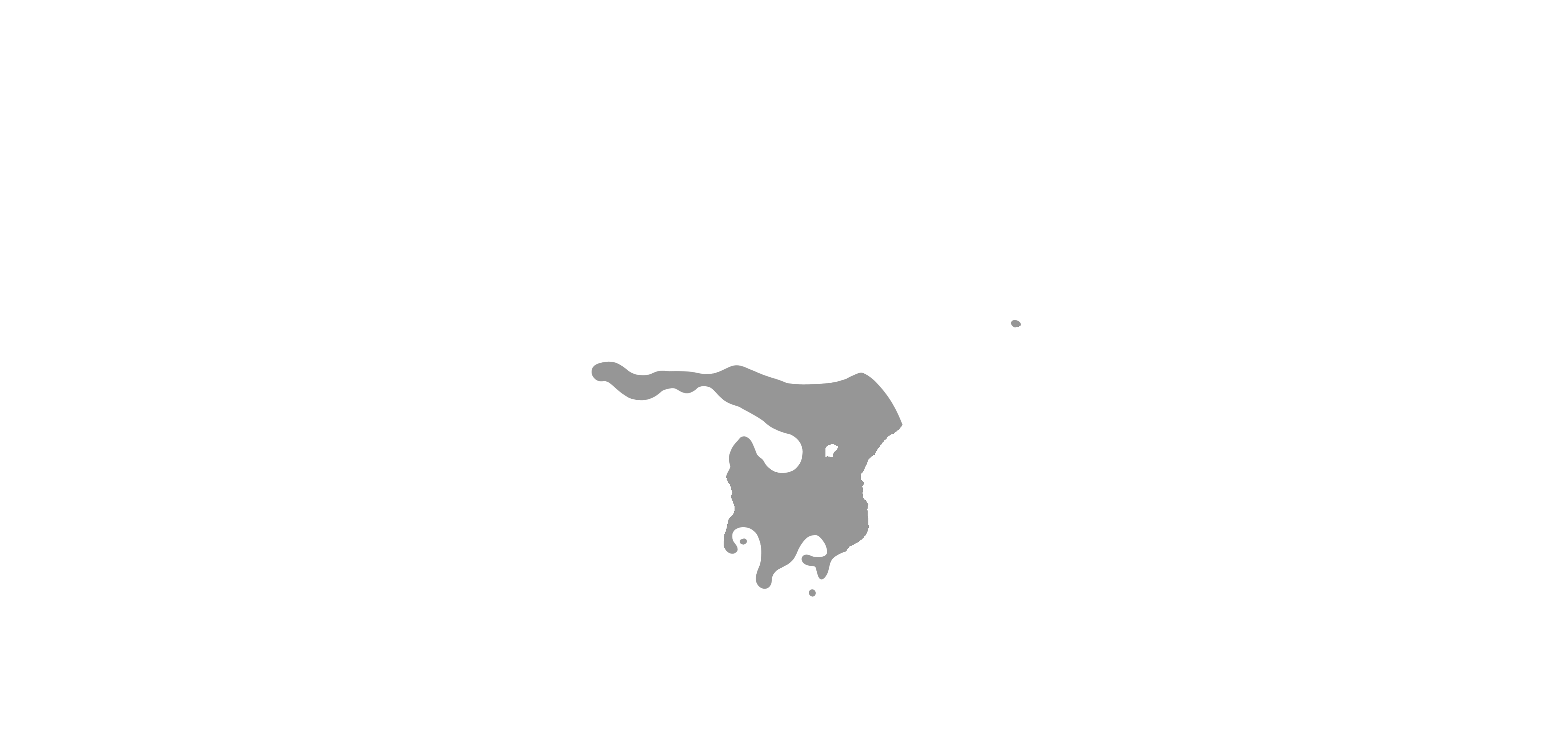
Range: Widespread across Africa through western, southern, and eastern Asia.
Leopards are the most widespread big cats, found from sub-Saharan Africa eastward through Asia to southeastern Asia and the Russian far east. Southern Africa likely has the largest and healthiest population of their range. Leopards inhabit a variety of habitats, including forests, savannahs, rainforests, and even deserts. They occur up to 4,600 meters a.s.l. on Mount Kenya and 5,200 meters in the Himalayas.
Conservation Status
Listed as vulnerable by the IUCN Red List under Criterion A2cd. Global leopard population has decreased by >30% in the past 21 years. The main threats are due to human expansion such as persecution, habitat loss and fragmentation, poaching for the wildlife trade or trophies, and prey loss. Leopard prey has decreased by approximately 59% in Africa due to the bushmeat trade. There was a 57% increase in habitat loss across their range from 1975 to 2000. Deforestation rates are especially high in their southeast Asian range, where land is converted for palm oil plantations. Habitat loss caused an estimated ~61% range reduction between 2007 and 2023 (Stein et al., 2023).
Poaching is especially a threat in east and southeast Asia, where leopard parts may be used in traditional medicine. In Africa, leopard skins are used in cultural ceremonies. In 2018, 90 Leopard poaching events were reported in Asia. Most poaching is unreported. There has been an average of 3.5 seizures per month in India since 2000. In Africa, It is suggested that 4,500 to 7,000 leopards are harvested annually for their skins by the Nazareth Baptist Church.
Ecology
Leopards are primarily nocturnal with peaks during dawn and dusk, but they may be diurnal in parts of the range. They are solitary besides mating and females with cubs (Stein & Hayssen, 2013). Home ranges vary based on resource availability and habitat, ranging from 8.8 km² in Thailand to 2,182 km² in Africa.
Leopards prefer medium-sized (10–40 kg) ungulates as prey wherever available. They are generalist predators, however, feeding on insects, reptiles, birds, and small mammals to large ungulates. In some areas, livestock is also part of the diet. Individual leopards may have a favorite prey item. Known prey across their range includes impala (Aepyceros melampus), springbok (Antidorcas marsupialis), duikers of various species (Cephalophus sp.), chital deer (Axis axis), rodents like bamboo and groove-toothed rats, muntjacs (Muntiacus sp.), sambar deer (Rusa unicolor), and primates like langurs (Cercopithecus and Semnopithecus sp.). Cattle (Bos taurus) and dogs are known prey. In arid areas leopards typically take small prey such as hyraxes (Procavia sp.) or rodents (Stein & Hayssen, 2013).
CC BY © N O E L | F E A N S / Flickr.
Reproduction
While there is no set breeding season, peaks vary by location with births sometimes affected by the season. Estrus lasts 5 to 13 days during which mating occurs multiple times per hour. Gestation varies from 88–112 days, with lactation being 114–130. Litters vary from 1–6 cubs, averaging two. Independence is typically reached at 13 months old. Females first breed around 2 to 2.5 years of age, while males can produce young at 1.5 (Stein & Hayssen, 2013).
CC BY-NC © Harsh1.0 / Flickr.
Diagnosis
Taxonomy
Felis pardus (Linnaeus, 1758). Type locality: "Indiis," restricted to "Egypt" by Thomas (1911) or "Algeria" by J. A. Allen (1924).
Felis panthera (Schreber, 1775). Type locality: "Africa," restricted to "Algeria" by Ellerman and Morrison-Scott (1951).
Felis leopardus (Schreber, 1775). Type locality: "Senegal."
Felis chalybeata (Schreber, 1775). No type locality specified.
Felis fusca (Meyer, 1794). Type locality: "India orientali."
Felis chalybeata (Hermann, 1804). No type locality specified.
Felis melas (G. Cuvier, 1809). Type locality: "Java."
Panthera vulgaris (Oken, 1816). Unavailable name.
Felis palearia (F. G. Cuvier, 1832). Type locality: "Alger."
Felis nimr (Hemprich & Ehrenberg, 1833). Type locality: "Arabia."
Felis variegata (Wagner, 1841). Unavailable name.
Felis varia (Gray, 1843). Name combination.
Felis poecilura (Valenciennes, 1856). Type locality: "Gabon."
Felis longicaudata (Valenciennes, 1856). Type locality: "Ia cote de Malabar ou de Ceylan."
Subspecies of Panthera pardus have not been subject to full comprehensive survey. Wozencraft (2005) recognized eight based on morphological studies by Miththapala et al. (1996): Panthera pardus pardus (Linnaeus, 1758), P. p. delacouri (Pocock, 1930), P. p. fusca (Meyer, 1794), P. p. japonensis (Gray, 1862), P. p. kotiya (Deraniyagala, 1949), P. p. melas (Cuvier, 1809), P. p. nimr (Hemprich & Ehrenberg, 1833), and P. p. orientalis (Schlegel, 1857). Miththapala et al. (1996) also recognized Panthera pardus saxicolor (Pocock, 1927), but Wozencraft did not. Based on more recent and clear molecular and morphological studies Kitchener et al. (2017) determined Panthera pardus tulliana to replace P. p. saxicolor (Pocock, 1927) and P. p. orientalis to include P. p. japonensis. The following subspecies were recognized:
 Panthera pardus delacouri (Pocock, 1930) Found in southeast Asia and possibly southern China, including the Malay peninsula and Vietnam.
 Panthera pardus fusca (Meyer, 1794). Found in the Indian subcontinent, including Burma and China.
Synonymous with Leopardus perniger (Hodgson, 1863) and Panthera pardus millardi (Pocock, 1930).
Panthera pardus fusca (Meyer, 1794). Found in the Indian subcontinent, including Burma and China.
Synonymous with Leopardus perniger (Hodgson, 1863) and Panthera pardus millardi (Pocock, 1930).
 Panthera pardus kotiya (Deraniyagala, 1949). Endemic to Sri Lanka.
 Panthera pardus melas (Cuvier, 1809). Endemic to Java.
Panthera pardus nimr (Hemprich & Ehrenberg, 1832). Endemic to the Arabian Peninsula.
Synonymous with Panthera pardus jarvisi (Pocock, 1932).
Panthera paruds orientalis (Schlegel, 1857). Found in eastern Asia from Russian Far East to China.
Synonymous with Leopardus japonensis (J. E. Gray, 1862), Leopardus chinensis (Gray, 1867), Felis fontanierii (Milne-Edwards, 1867), Felis ingrami (Bonhote, 1903), Felis [Leopardus] grayi (Trouessart, 1904), Panthera hanensis (Matschie, 1908), Felis pardus sinensis (E. Brass, 1911), and Panthera pardus bedfordi (Pocock, 1930).
Panthera pardus pardus (Linnaeus, 1758). Widespread throughout sub-Saharan Africa.
Synonymous with Felis pardus panthera (von Schreber, 1778), Felis leopardus melanotica (Günther, 1885), Felis leopardus suahelicus (Neumann, 1900), Felis leopardus nanopardus (Thomas, 1904), Felis pardus ruwenzorii (Camerano, 1906), Felis pardus chui (Heller, 1913), Felis pardus iturensis (J. A. Allen, 1924), Felis pardus reichenowi (Cabrera, 1927), Panthera pardus adusta (Pocock, 1927), Panthera pardus adersi (Pocock, 1932), and Panthera pardus brockmani (Pocock, 1932).
Panthera pardus tulliana (Valenciennes, 1856). Found throughout the Middle East into Afghanistan.
Synonymous with Felis ciscaucasica (Satunin, 1914), Panthera pardus saxicolor (Pocock, 1927), and Panthera pardus sindica (Pocock, 1930).
References
Stein, A., Athreya, V., Gerngross, P., Balme, G., Henschel, P., Karanth, U., Miquelle, D., Rostro-García, S., Kamler, J., Laguardia, A., Khorozyan, I., & Ghoddousi, A. (2023).
Panthera pardus. IUCN Red List of Threatened Species. https://doi.org/10.2305/iucn.uk.2023-1.rlts.t15954A215195554.en
Stein, A. B. & Hayssen, V. (2013). Panthera pardus. Mammalian Species, 45(900), 30–48. https://doi.org/10.1644/900.1