 Class:
 Mammalia
Order: Carnivora
Suborder: Feliformia
Family: Felidae
Genus: Panthera
Species: Panthera leo
IUCN Red List Status: Vulnerable.
Population: Estimated to be between 22,000 and 25,000 in Africa and ~670 in India.
Trend: Decreasing, with the fastest declines outside of southern Africa. Numbers have decreased by over 40% in the past 21 years.
Range: Sub-Saharan Africa and the Gir Forest of India.
Lions are found sporadically in sub-Saharan Africa and the Gir National Park of India. In Africa, lions are found across Sahel from Senegal to Ethiopa south to the horn, with main strongholds in Kruger and Kalahari National Park, South Africa. Lions are extinct in up to 85% of their historic range, including northern Africa, the Middle East, west Asia, and even southeast Europe. Lions inhabit a variety of habitats, absent only from tropical rainforests and the interior Sahara Desert. They occur up to 4,000 meters above sea level in the Bale Mountains in Ethiopia and on Mount Kilimanjaro in Tanzania. Lions in the Gir Forest of India prefer the most mesic and thick canopy forest vegetation available.
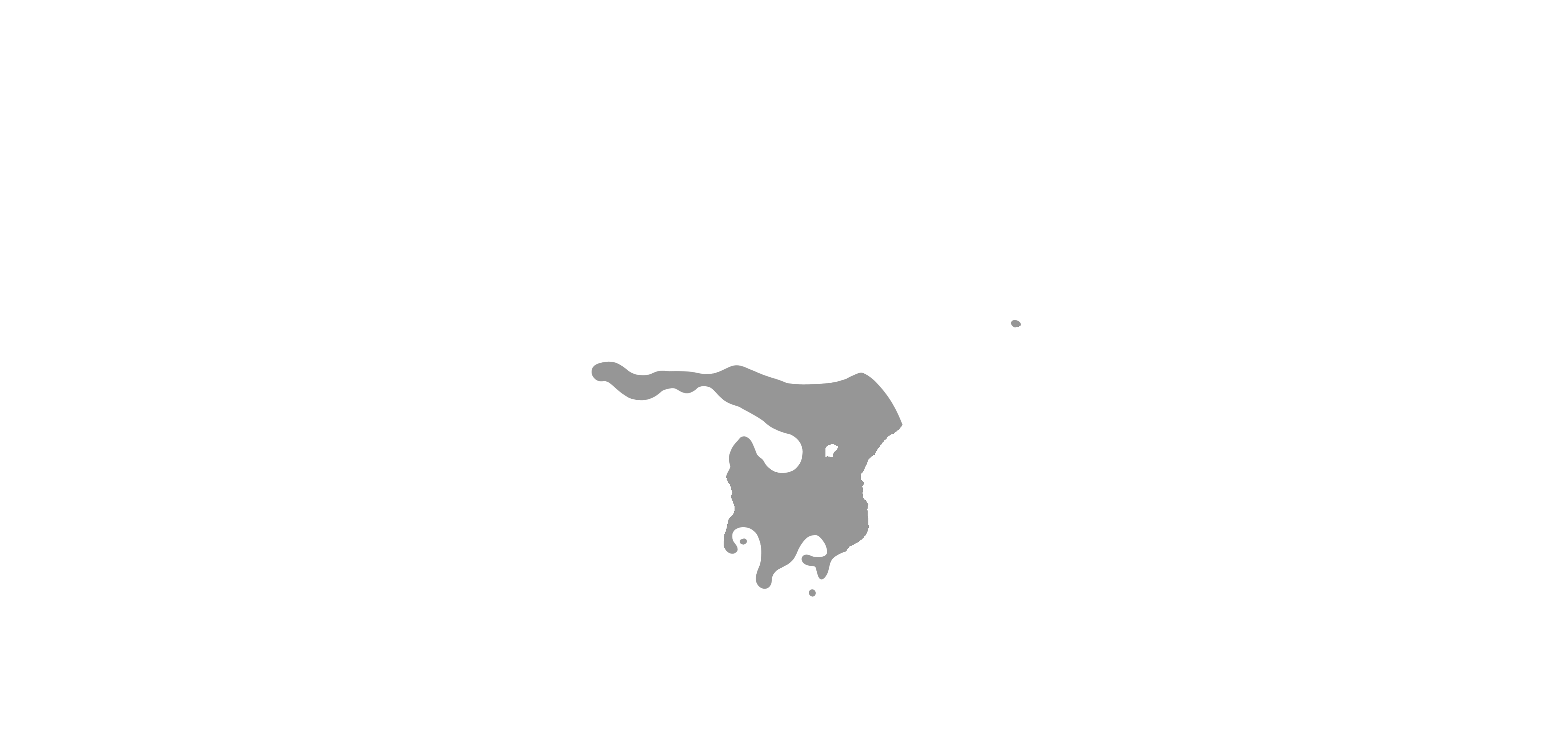
Conservation Status
Panthera leo assessed as vulnerable by the IUCN Red List under Criterion A2c, based on an estimated 34% decline in their range over three generations (approximately 21 years). Habitat loss has greatly reduced lion distribution to an estimated 1,566,675 square kilometers, only 6% of their historical range. The primary threat to lions is habitat loss, as well as prey depletion, human-wildlife conflict, and poaching for the illegal wildlife trade and traditional medicine. Trophy hunting and snare bycatch are concerns in some countries. Prey loss is strongly linked to poaching and the bushmeat trade. Human-lion conflict, particularly with farmers in defence of their livestock, often results in retaliatory killing of lions (Nicholson et al., 2021).
Lions in both Africa and India are exploited for their bones and other body parts used in traditional medicine or for decoration. Targeted and suspected poaching mortality is high, accounting for 74% and 48% of human-caused deaths in Niassa and Limpopo national parks, respectively. A reported 2,515 lion parts were imported to the United States and Europe from 2000 to 2018, with 83% being trophies. 1,555 parts from about 98 individual lions were seized between 2010 and 2019, 1,197 (76%) being of claws. Teeth (292, 18.7%) were also traded, followed by skins and bones (23, 1.47% for both). This trade results in an average of 11 lion fatalities per year (Mole & Newton, 2020).
Ecology
Lions are the most social of the cats, forming prides or coalitions. Mixed-sex prides average four to six adults but can be up to 30. Prides in India tend to be smaller from two to eleven females. Pride ranges vary widely from 52 to 4,532 km² depending on location. These ranges often overlap, but a core area is heavily maintained. The average pride consists of 5–9 adult females (1–18), dependent offspring, and a coalition of 2–6 unrelated adult males. Some males are nomadic and form coalitions of up to 5. Lions across Africa were found to be mostly nocturnal and crepuscular, with their activity peaking from 1700 to 0400 hours (Hayward & Slotow, 2009).
They prey on medium- to large-sized mammals ranging in life from warthogs to elephants, with a noted preference for ungulates weighing from 40 to 251 kg. The main prey across their range is springbok (Antidorcas marsupialis), making up 29.3% of reported kills. Other prey includes kob (Kobus kob; 27.89%), common wildebeest (Connochaetes taurinus; 25.99%), Gemsbok (Oryx gazella; 23.29%), Indian chital or axis deer (Axis axis; 21.48%), and African buffalo (Syncerus caffer; 20.65%). Prey in Gir National Park, India include the chital deer, sambar deer (Cervus unicolor), and nilgai (Boselaphus tragocamelus). They are known to be opportunistic scavengers, often displacing other scavengers. Lions may take smaller prey such as rodents, tortoises, fish and insects, and occasionally feed on grasses or fruits like wild watermelon (Hayward & Kerley, 2006).
CC BY © N O E L | F E A N S / Flickr.
Reproduction
Although there is no breeding season, births tend to peak based on seasonal weather and prey availability. Estrus is triggered by other females of the pride being in estrus or the loss of her cubs due to infanticide. Estrus lasts 4–7 days on average. During estrus, mating occurs up to 100 times per day with multiple males. Ovulation is prompted by copulatory behavior. Gestation averages 110 days after which one to four cubs are born. The mean interbirth period is 20 months, or 4 to 6 months if the first litter does not survive. Cubs are raised together with the pride and nurse from any lactating females until weaning at 8 months (Haas et al., 2005).
Sexual maturity is reached around 24 months for both sexes. Mane growth begins at 2 years for males. Four years is the average age of the female's first litter and when males join a pride. Infanticide is common during takeovers by unrelated males.
CC BY-NC © Harsh1.0 / Flickr.
Diagnosis
The lion is the second largest big cat, with adult males weighing up to 272 kg. Males are 20 to 70% heavier than females (120 to 180 kg) with a mane. The body is muscular with a deep chest and round, broad head. Their pelage varies by location, ranging from light buff with silvery-gray guard hairs to a yellowish red with dark brown hairs. Generally, the color is tawny or sandy with white underparts; white lions are known from parts of South Africa. There is a characteristic tuft of hair on the tip of their tail. Young are spotted, but the spots usually fade as the lion ages. Males have a noticeable mane on the back of the head and neck, varying in size and color (from tawny to black). Mane growth is influenced by testosterone and darkens with age. African and Asiatic lions are distinguished mostly by a longitudinal fold of skin along the underbelly of the latter, but Asiatic individuals also tend to be smaller.
Taxonomy
Felis leo (Linnaeus, 1758). Type locality: "Africa," restricted to "Constantine, Algeria" by J. A. Allen (1924).
Leo africanus (A. E. Brehm, 1829). No type locality specified. Later changed to Felis africanus (Burnett, 1830).
Leo asiaticus (A. E. Brehm, 1829). No type locality specified. Later changed to Felis asiaticus (Burnett, 1830).
Leo melanochaitus (C. H. Smith, 1842).
Leo asiaticus (Jardine, 1834). Name combination
Leo gambianus (Gray, 1843). Type locality: "W. Africa, interior of Gambia." Nomen nudum.
Leo indicus (Blainville, 1843). No type locality specified, presumably India.
Tigris leo (Severtzoff, 1858). Name combination.
Leo nobilis (Gray, 1867). Renaming of Felis leo (Linnaeus, 1758). Nomen nudum.
Panthera leo (Pocock, 1930). First use of current name combination.
Leo maculates (Heu velmans, 1955). Nomen nudem.
First described as Felis leo by C. Linnaeus in 1758, likely from Algeria. The lion has been subsequently placed in the genera Leo (A. E. Brehm, 1829) and Tigris (Severtzoff, 1858), the former being historically widespread for the species. The genus name Panthera was coined by Lorenz Oken in 1816, used for the spotted big cats Panthera onca and Panthera pardus. Reginald Innes Pocock revised the genus in 1916, placing Panthera leo within Panthera for the first time. Many subspecies and species of Panthera leo have been described, with few having sufficient genetic or molecular evidence. Molecular studies of Panthera leo confirmed a divergence between lions of eastern and southern Africa and individuals from outside of this range. Bertola et al. (2016) propose the classification of only two subspecies based on genetic data, as supported by Kitchener et al. (2017):
 Panthera leo leo (Linnaeus, 1758). Found in central and west Africa, as well as India. Synonymous with Felis leo persicus (Meyer, 1826), Felis leo senegalensis (Meyer, 1826), Felis leo nubicus (de Blainville, 1843), Leo gambianus (J. E. Gray, 1843), Felis leo kamptzi (Matschie, 1900), and Leo leo azandicus (J. E. Allen, 1924).
 Panthera leo melanochaita (Smith, 1842). Found in south and east Africa. Synonymous with Felis leo somaliensis (Noack 1891), Felis leo massaicus (Neumann 1900), Felis leo sabakiensis (Lönnberg 1910), Felis leo roosevelti (Heller 1913), Felis leo nyanzae (Heller 1913), Felis leo bleyenberghi (Lönnberg 1914), Leo leo hollisteri (J. A. Allen 1924), Leo leo krugeri (Roberts, 1929), Leo leo vernayi (Roberts 1948), and Panthera leo webbensies (Zukowsky, 1964).
References
Haas, S., Hayssen, V., & Krausman, P. (2005).
Panthera leo.
Mammalian Species, 762, 1–11.
https://doi.org/10.2307/3504539
Hayward, M. W. & Kerley, G. I. H. (2006). Prey preferences of the lion (Panthera leo). Journal of Zoology, 267(3), 309–322. https://doi.org/10.1017/S0952836905007508
Hayward, M. & Slotow, R. (2009). Temporal partitioning of activity in large African carnivores: Tests of multiple hypotheses. South African Journal of Wildlife Research, 39(2), 109–125. https://doi.org/10.3957/056.039.0207
Mole, K. & Newton, D. (2021) An assessment of trade, mortalities and anthropogenic threats facing lions in Tanzania and Mozambique. TRAFFIC. https://www.traffic.org/publications/reports/african-lion-trade-an-assessment-of-trade-mortalities-and-anthropogenic-threats-facing-lions-in-tanzania-and-mozambique/
Nicholson, S., Bauer, H., Strampelli, P., Sogbohossou, E., Ikanda, D., Tumenta, P. F., Venktraman, M., Chapron, G., & Loveridge, A. (2023). Panthera leo. IUCN Red List of Threatened Species. https://doi.org/10.2305/iucn.uk.2023-1.rlts.t15951a231696234.en